
Mobile or Stationary? A Plant Decision Guide
Comparison by project duration, portability and total cost of ownership.
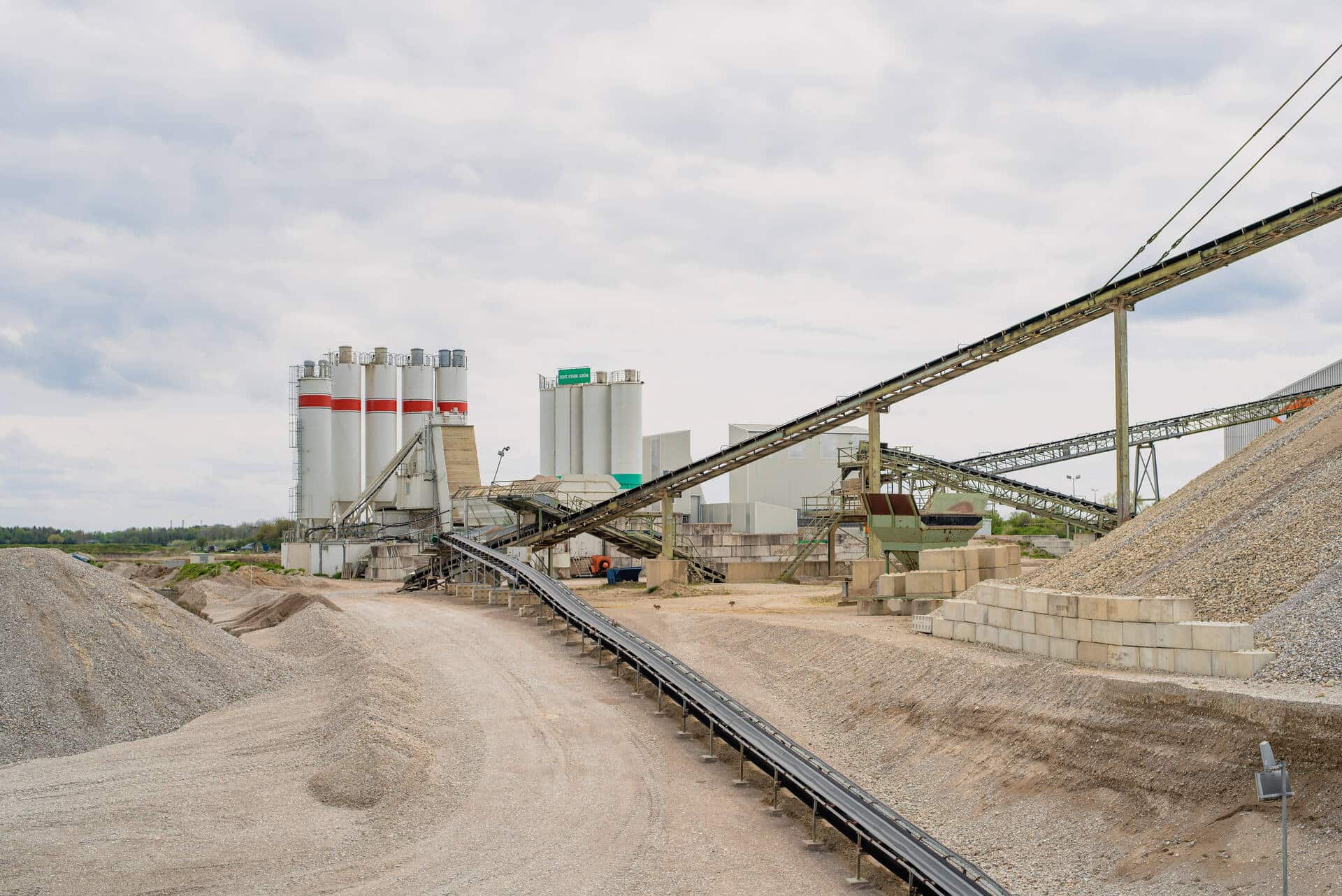
One of the most confused decision points when setting up a quarry or aggregate plant is which crusher type to use at the primary and secondary crushing stages. Jaw crushers and cone crushers work on different principles, so they should be seen as complementary equipment rather than substitutes for one another. In this article, we look at the key differences between the two, which application suits which crusher, and how to decide based on capacity and material hardness.
How does a jaw crusher work?
Jaw crushers crush material by compression in a wedge-shaped cavity formed between a fixed jaw and a movable jaw driven by an eccentric shaft. The material is subjected to this compression action until it reaches a size that can pass through the set crushing gap. This working principle makes the jaw crusher especially suited to the primary crushing stage: it can accept large feed sizes (blasted rock, quarry blocks) and offers a long service life on hard, abrasive materials.
How does a cone crusher work?
In cone crushers, continuous compression takes place between the mantle (moving cone) and the concave (fixed outer body). As the mantle rotates, it compresses material against the concave, producing a more homogeneous, more cubical product. Cone crushers are generally used at the secondary and tertiary crushing stages, refining the output of the jaw crusher into smaller, more uniform particle sizes.
Comparison Table
| Criterion | Jaw Crusher | Cone Crusher |
|---|---|---|
| Stage used | Primary crushing | Secondary / tertiary crushing |
| Accepted feed size | Large (blasted rock, quarry blocks) | Medium (jaw crusher output) |
| Product shape | More angular | More cubical, homogeneous |
| Wear resistance | High (preferred for hard/abrasive materials) | Medium-high, requires regular concave/mantle replacement |
| Maintenance needs | Low-medium | Medium (more technical monitoring due to hydraulic setting system) |
| Typical use case | Quarries, mining, recycling — first stage crushing | Aggregate production, sand-gravel prep for concrete/asphalt — fine crushing |
Which one should you choose, and when?
- If you only need primary crushing (for example, a small-scale site or a recycling line), a jaw crusher alone may be sufficient.
- If you're aiming for high-quality, cubical aggregate (for concrete or asphalt production), a cone crusher stage must be added after the jaw crusher.
- If you're processing very hard, abrasive material (granite, basalt, quartz), using a jaw crusher's durability at the primary stage and fine-tuning with a cone crusher at the secondary stage reduces overall operating costs.
- If you're setting up a mobile plant, a jaw crusher is most often chosen as the standalone primary unit; cone crushers are more commonly positioned as a secondary stage in stationary plants.
Conclusion
There is no single answer to "which is better" between a jaw crusher and a cone crusher — the right question is "which one, at which stage." In most efficient crushing and screening plants, the two units work in sequence to complement each other: the jaw crusher handles the initial breakdown of large material, while the cone crusher shapes the final product into the desired size and quality.
To determine the right crusher combination for your project's capacity and material characteristics, request a quote from our technical team.